- English
- French
- German
- Portuguese
- Spanish
- Russian
- Japanese
- Korean
- Arabic
- Greek
- German
- Turkish
- Italian
- Danish
- Romanian
- Indonesian
- Czech
- Afrikaans
- Swedish
- Polish
- Basque
- Catalan
- Esperanto
- Hindi
- Lao
- Albanian
- Amharic
- Armenian
- Azerbaijani
- Belarusian
- Bengali
- Bosnian
- Bulgarian
- Cebuano
- Chichewa
- Corsican
- Croatian
- Dutch
- Estonian
- Filipino
- Finnish
- Frisian
- Galician
- Georgian
- Gujarati
- Haitian
- Hausa
- Hawaiian
- Hebrew
- Hmong
- Hungarian
- Icelandic
- Igbo
- Javanese
- Kannada
- Kazakh
- Khmer
- Kurdish
- Kyrgyz
- Latin
- Latvian
- Lithuanian
- Luxembou..
- Macedonian
- Malagasy
- Malay
- Malayalam
- Maltese
- Maori
- Marathi
- Mongolian
- Burmese
- Nepali
- Norwegian
- Pashto
- Persian
- Punjabi
- Serbian
- Sesotho
- Sinhala
- Slovak
- Slovenian
- Somali
- Samoan
- Scots Gaelic
- Shona
- Sindhi
- Sundanese
- Swahili
- Tajik
- Tamil
- Telugu
- Thai
- Ukrainian
- Urdu
- Uzbek
- Vietnamese
- Welsh
- Xhosa
- Yiddish
- Yoruba
- Zulu
Is a handheld gas blower stronger than an electric?
People who buy, sell, and work in businesses all look at outdoor power tools and ask the same question: is a handheld gas blower better than an electric model? It's easy to see that gas-powered units have more real power—air speed (MPH) and air volume (CFM) show this. Powerful two-stroke gasoline engines can often go over 170 MPH and 450 CFM. This lets workers move big things, wet leaves, and squished-together junk that electric engines have trouble moving. Gas blowers are needed for large-scale farms, construction sites, and industrial landscaping jobs that need to last and work well in tough conditions because they have more power.
Fundamental Differences Between Handheld Gas and Electric Blowers
You need to know how each power source works and what problems it can cause before you can pick the right blower technology. Gas and electric blowers are both used in similar places, but they are built and work in very different ways.
Operating Principles of Gas-Powered Blowers
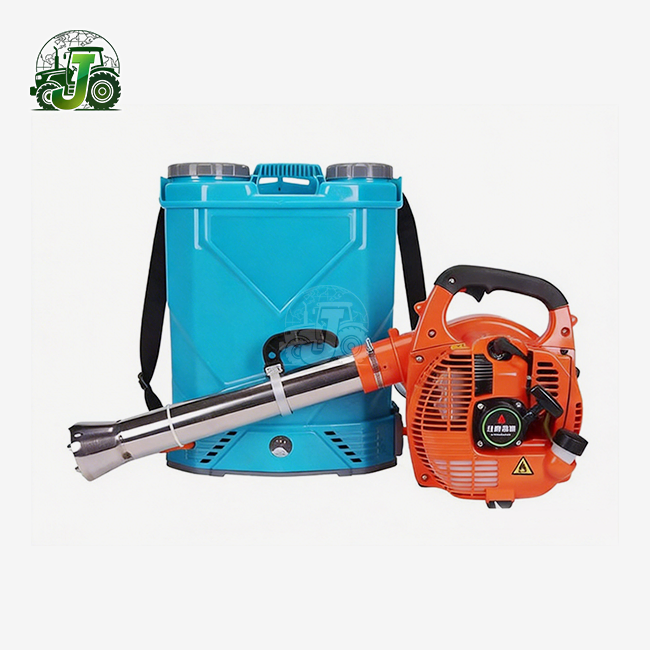
Gas blowers have engines that burn fuel, and two-stroke motors are most common in handheld gas blower types. This kind of engine can do the intake, compression, power, and combustion processes all in just two piston strokes. This lets them be small while still having a lot of power for their weight. The two-stroke engine needs fuel that has already been mixed 50:1 with gasoline and oil. While the engine is going, this fuel keeps the moving parts inside it smooth. Since the engine is designed this way, it can work upside down, sideways, or turned without losing oil. This is very useful for cleaning out gutters, under decks, or along fences. Most of the time, the engine is between 21cc and 28cc in size. It can move air at 350 to 500 CFM and up to 200 MPH. That being said, the noise level is generally higher, between 69 and 75 dB(A), and emissions are limited by EPA Phase 3 and CARB rules.
How Electric Blowers Function
Electric blowers can be powered by battery packs or by plugging them directly into a wall outlet. Battery models use lithium-ion cells with voltages ranging from 18V to 80V and brushless DC motors. With almost no friction loss, these motors turn electricity into moving power. This stops all direct leaks and makes them quieter. Most connected electric units can run for a long time, but they are attached to a power source, which makes it harder to move around. A lot of electric blowers move air at speeds of 100 to 150 MPH and make 200 to 400 CFM of air flow. They are cleaner and quieter, but not as strong, so they are best for small fields, decks, and roads that don't need to be swept.
Performance Comparison: Is a Handheld Gas Blower Stronger Than an Electric?
The most important thing to look at when choosing between gas and electric handheld gas blowers is still how much power they have. Performance measures, like air speed, air volume, and Newton force, show how well a blower moves things. Gas-powered blowers always do better in these areas than battery-powered ones.
Air Velocity, Power Output, and Ergonomic Factors
They measure the speed of the air leaving the hole in miles per hour. This is called air velocity. Things that are hard to move, wet, or packed down, like wet leaves or dirt stuck in sidewalk cracks, can be moved out of the way at high speeds. The fastest gas blowers can go as fast as 200 MPH. Most of them can go faster than 170 MPH. Small electric units can only go as fast as 150 MPH, so they aren't as good for heavy-duty jobs. To find out how much air is moving, you need to know its volume, which is given in cubic feet per minute. A blower with a high CFM can easily move big stacks over a lot of space. Most gas models give off 400 to 500 CFM, while most electric models give off 250 to 350 CFM. Newton force is the real way to measure how hard something can blow. It is found by adding MPH and CFM together. Gas models can go up to 25 Newtons, while electric models can only go up to 8 Newtons. Two more things that affect ease are how the weight is distributed and how well the sound is absorbed. Most of the time, hand-arm tremors at 2.5 to 4 m/s² are measured with gas units, which weigh about 10 to 12 pounds. Most electric types weigh between 8 and 10 pounds less and don't move faster than 2 m/s². This makes them easier on the body after a while of use.
Operational Costs: Fuel Consumption vs. Battery Life
This is something that gas blowers always need. It costs around $3 to $5 a day, depending on how much they are used and how much fuel costs where they are used. It takes an extra $50 to $100 a year to do maintenance, which includes setting the engine and changing the spark plugs. Units that run on batteries don't need fuel, but the cells need to be changed every 300 to 500 charges. A new pack costs between $80 and $200, depending on the power. You need to think about the charging method and the time between battery swaps when you plan your activities. It costs about the same to own a gas blower for five years as an electric blower, even though gas blowers use more fuel. This is especially true in heavy-duty industrial areas where the need for run time and power is greater than what batteries can provide.
Practical Use Cases: Heavy-Duty vs. Light-Duty Applications
In the country, gas blowers are great for places like farms where workers have to clean up leaves, fruit, and dust from many acres of land every day. To get rid of the sawdust, concrete dust, and dirt that is spread out on building sites, you need something that works well. Road repair workers in the city use gas units to quickly clean out gutters, sidewalks, and parking lots. To keep private homes in good shape, do small amounts of gardening, and clean the floors of buildings inside, electric blowers work well. They're good for places that don't want noise because they make less of it, and they meet standards for indoor air quality because they don't pollute. Many distributors who work with many different types of clients keep both technologies in stock to make sure that their clients can find the right tools for their needs and level of work.
Making the Right Choice: Which Handheld Blower Suits Your Business Needs?
To find the best handheld gas blower, you need to match the specs of the machine to the needs of the job while also taking into account the amount of work that needs to be done, the working conditions, the surroundings, and the experience level of the user. An organized way to evaluate makes it easier to decide what to buy and makes sure that it fits with the company's long-term goals.
Matching Specifications to Operational Profiles
Business landscaping companies, city maintenance crews, and fields that do a lot of work should use gas blowers because they have more power, last longer, and can handle rough conditions. Gas types that can be used in two different ways (handheld and shoulder-strap carrying) are good for medium-sized cleaning jobs like getting rid of crop leaves, building site dust, and road debris. Because they are quieter, don't pollute, and are easier to keep up, electric blowers are better for low-intensity jobs like keeping homes, small gardens, and buildings inside. The choice is also affected by the terrain. Gas units work better in places with uneven ground, lots of trees, and a lot of space between buildings. This is because they can run for as long as they need to and are made to last. But electric choices work best in places that have noise limits and make it easy to get power.
Balancing Power with Ergonomics
How tired and effective a person is is affected by the weight, the amount of vibration, and the shape of the handle. Your hands and arms will be more comfy during long shifts if you have gas blowers with anti-vibration spring mounts or rubber isolators. With soft-grip grips and designs that have a balanced center of gravity, your wrists won't move as much. This keeps you from getting repeated strain injuries that are common with heavy use. Because electric types naturally make less vibration, they are better for people who are more likely to get hand-arm vibration syndrome or who work jobs longer than eight hours. Purchasing managers should look for ergonomic features in equipment they buy for rental companies or joint service providers. These features will make the equipment more acceptable to a wider range of users and reduce turnover.
Recommendation Framework Based on Key Metrics
Many factors are used to make a decision, such as air speed, noise level, maintenance needs, and how well fuel or batteries work. It is decided how important each factor is in real life. For example, power output gets a 40% weighted score, comfort gets a 25% weighted score, cost gets a 20% weighted score, and compliance gets a 15% weighted score. Makers who follow ISO 9001, CE, and EPA rules are chosen based on how long the products last and how the business is perceived. Their own high-efficiency transfer systems and low-energy power matching technology help Shandong Jieshi save more than 10% on fuel and run their business 15% to 20% more efficiently than the average company in the same field. This really helps the business do better and keeps prices low. Procurement managers use technical support teams and product sample programs to make sure that specs work in the real world. This makes sure a perfect fit and smart choices for investments.
Conclusion
Handheld gas blowers that run on gas are stronger and do a better job in terms of air speed, volume, and Newton force than electric blowers. Their two-stroke engines make a lot of strong power that is needed for hard jobs in construction, farming, and industrial landscaping, where equipment lasts a long time and works well. Electric blowers are better for light tasks and places that don't need a lot of noise because they are quieter, don't pollute, and are easier to keep up. When you buy something, you need to find the best balance between raw power, realistic costs, legal compliance, user comfort, and the reliability of the seller. If distributors, farm owners, unions, and government agencies know about these things, they can choose equipment that helps them reach their long-term goals, keeps workers safe, and is worth money in the long run. When you work with experienced providers, you can be sure that you will have access to tried-and-true technologies, quick help, and customization options that will make your business stand out in large markets around the world.
FAQs
What is the correct fuel-to-oil mixture for a two-stroke blower?
In business, the rule is 50:1. This means that there should be 2.6 ounces of JASO FD or ISO-L-EGD rated synthetic two-cycle oil for every gallon of fuel. If you run the engine on straight gas, the pistons will stop moving right away, and the engine will crash. Also, oil ratios that are too high, like 20:1, make carbon build up on the exhaust ports, spark plugs get dirty, and spark arrestor screens get jammed. All of these things hurt the engine's function and shorten its life.
Why does my gas blower bog down when I pull the trigger?
Most of the time, bogging happens when the intake or exhaust system is too small. Check the spark arrestor screen in the muffler to see if carbon has built up on it. Because of the ethanol fuel, the high-speed needle in the carburetor might need to be changed, or the internal diaphragm might have become stiff. In this case, a fix kit is needed to get the fuel-air mixture and throttle response back to normal.
How often should the air filter be replaced on a gas blower?
To keep engines going at their best in places with a lot of dust, they should be cleaned every day and replaced every week. Every 10 hours, people who have filters at home should check them. Too much fuel in the engine when the filter is clogged causes the RPM to drop, the temperature to rise, and the wear on internal parts to happen faster.
Partner with Jieshi for Reliable Handheld Gas Blower Solutions
Looking to buy a handheld gas blower? Shandong Jieshi Machinery Equipment Co., Ltd. is ready to help you. They have tried and tested choices that are made to work well, last a long time, and be comfortable for the user. Our two-stroke gasoline engines are very strong and can be used for medium- to large-scale cleaning jobs, like getting rid of crop leaves, construction site dust, and trash from the road. It's more flexible because it can be used by hand or carried on the shoulder, and the low-temperature starting technology makes sure it works consistently even when it's cold outside. ISO 9001 approval, compliance with CE, EAC, ANSI, and TISI standards, and unique high-efficiency drive systems all help to make sure that equipment meets world standards and saves a certain amount of fuel. We are a trustworthy company that makes handheld gas blowers and ships them to over 100 countries. We offer full OEM/ODM customization, standard model delivery within 72 hours, strategic multimodal shipping through the ports of Qingdao and Yantai, and expert support in multiple languages 24 hours a day, seven days a week, backed by global spare parts centers. You can email us at marketing@jieshimfg.com to talk about big discounts, guarantee terms, and unique solutions that will help your business run better and give you an edge over your competitors.
References
- American National Standards Institute (ANSI). (2017). Safety Requirements for Powered Air Blowers—ANSI B175.2. ANSI Publications.
- Environmental Protection Agency (EPA). (2020). Phase 3 Small Engine Emission Standards and Compliance Guidelines. EPA Office of Transportation and Air Quality.
- International Organization for Standardization (ISO). (2018). ISO 9001:2015 Quality Management Systems—Requirements and Implementation. ISO Standards Catalogue.
- Society of Automotive Engineers (SAE). (2019). Two-Stroke Engine Design and Performance Optimization. SAE International Technical Papers.
- European Commission. (2016). Euro V Emission Standards for Non-Road Mobile Machinery. Official Journal of the European Union.
- Occupational Safety and Health Administration (OSHA). (2021). Hand-Arm Vibration Syndrome Prevention and Control Measures in Outdoor Power Equipment. OSHA Technical Manual.
Learn about our latest products and discounts through SMS or email